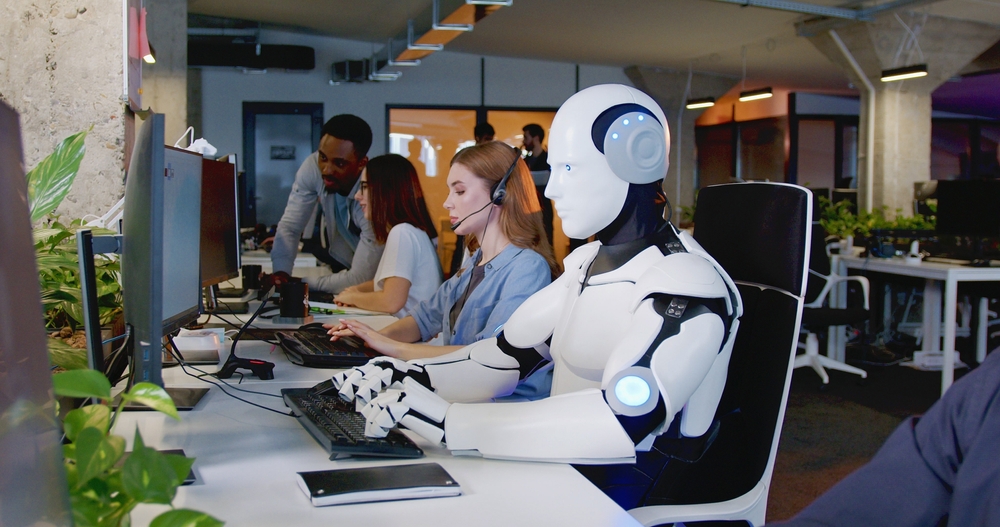
Artificial intelligence (AI) is everywhere, and speculation and debate around job displacement is heating up, but is it really causing layoffs or just reshaping how we work?
Although headlines warn of mass job losses, experts are pointing out that the reality is more nuanced. So, what’s really happening in the labor market, and how should workers and companies prepare? Here’s what the research shows.
AI in context: How work is changing
Current evidence suggests that AI’s impact is uneven and selective, changing how people work rather than eliminating jobs outright. However, some warnings are warranted. MIT’s Iceberg Index found that AI and automation are already capable of performing a significant share of U.S. labor tasks and are reshaping employment. While this projection can seem alarming, disruptions are largely concentrated in entry-level and early-career roles, particularly those that are routine and rules-based. Mid- and senior-level employees remain largely unaffected.
Researchers have emphasized that the MIT statistics measure task-level exposure, not projections of job losses. This means that the representation of what AI can technically do does not reflect what employers or companies will choose to automate. For example, radiologists (a role frequently cited as highly susceptible to AI) still face strong demand. The high cost of medical misdiagnosis, along with regulatory and institutional barriers, means AI is generally used to supplement human work rather than replace it. This distinction between technological capability and organizational choice defines the position companies now find themselves in.
While AI can augment many roles, its effect on overall employment appears limited. Out of 1.1 million U.S. job cuts this year, only about 55,000 (less than 5%) cited AI as a factor, equating to roughly 0.03% of overall employment. While layoffs are on the rise, research shows AI isn’t the main driver. It may be part of the conversation, but the primary causes are better explained by government cutbacks, corporate belt-tightening, and softening demand.
The long-term effects of AI depend largely on how companies use it. Those that use AI to largely replace workers may achieve short-term cost savings but see limited long-term impact. In contrast, companies that use AI to enhance their workforce’s productivity, augmenting rather than replacing human labor, may generate lasting value and sustained productivity gains, which can be more appealing from an investment perspective.
How companies are using AI in the workplace
While AI has not been the primary cause of widespread layoffs, some companies are experimenting with AI in ways that influence workforce composition. These examples highlight how AI can either replace certain roles or augment human productivity, depending on how it is applied:
- HP: Plans to reduce 4,000–6,000 corporate jobs by 2028, citing AI-driven productivity measures. AI is part of broader efforts to simplify processes, improve innovation, and cut spending.
- IBM: Automating some back-office HR tasks with AI while increasing hiring in AI, programming, and sales roles, showing a mix of replacement and workforce augmentation.
- Salesforce: Using AI to replace workers in the customer support department for routine tasks, with reductions offset by redeployment to other divisions, allowing employees to focus on higher-value areas.
- Amazon: Using AI to improve efficiency, speed, and customer experience but emphasized recent workforce reductions were driven by operational and cultural considerations rather than AI.
- Klarna: Uses AI to handle routine customer support and boost efficiency, while redeploying human and outsourced teams despite previous comments from the CEO.
- Fiverr: Plans to reduce its workforce by 30% and is initiating an ‘AI-first’ approach, only hiring new employees with preexisting AI skills.
Although there have been AI-driven layoffs, its impact on the workforce is not uniform. Researchers argue that AI is shaping roles, enhancing productivity, and reallocating talent rather than simply eliminating jobs. Even when AI replaces some positions, companies may hire more people in other roles or redeploy employees to higher-value tasks.
The road forward: Preparing for the future of work in an AI era
Researchers are finding that AI is reshaping work rather than driving widespread layoffs, emphasizing that exposure does not equal displacement. The ultimate impact depends on how companies, workers, and policymakers respond. While AI may lead to targeted reductions in certain routine roles, it is also creating opportunities for redeployment and productivity gains. Regardless of your feelings about AI, these trends highlight the importance of strategic workforce planning and ongoing skill development.
Whether it’s staying adaptable in the workforce or ensuring your finances are prepared for a changing economy, thinking ahead now can make the challenges of tomorrow much easier to handle.
Life and work are changing fast. Planning for the future is key. You can reach Megna Financial at (608) 203-8006, or email us at contact@megnafinancial.com.
This article is for general information purposes only from sources believed to be accurate. It should not be construed as tax advice. In every case, you should consult with your own personal team of tax, financial, and legal advisors for tax advice specific to your own personal financial situation.
Sources: